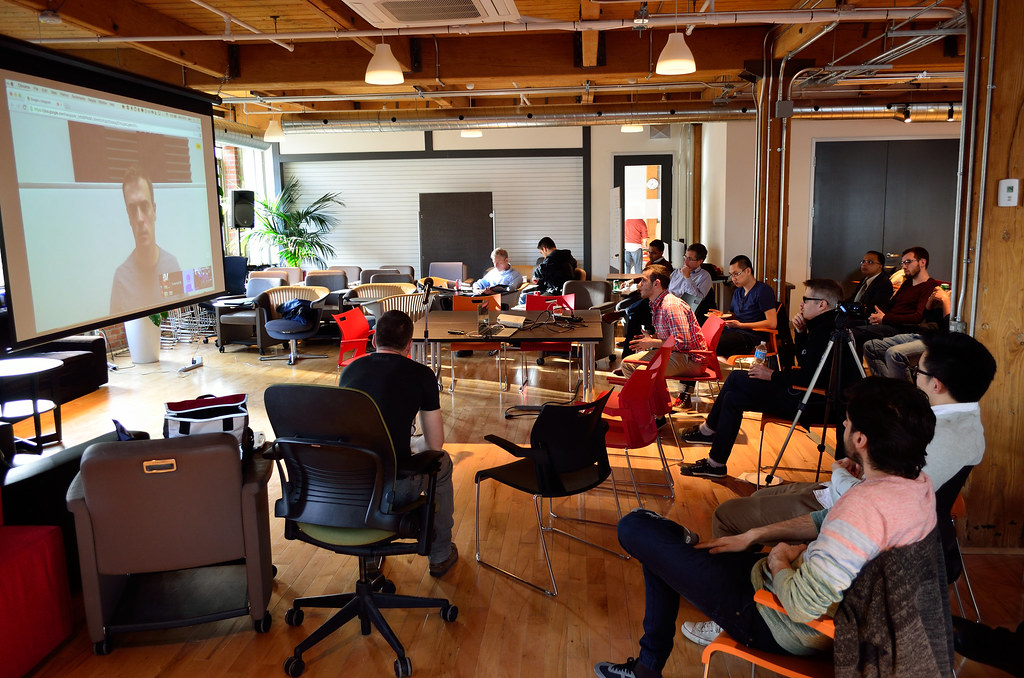
**Focus group questions explore what participants think, do and experience. There is usually no single correct consumer opinion.
Prepare by remembering genuine examples, reading the invitation and understanding the discussion format, not by rehearsing answers that you think will earn selection.**
Most search results for this topic help researchers write questions. This article takes the participant's perspective.
It explains what different questions are trying to uncover and how to respond honestly in a paid discussion.
For places to compare, use our existing online focus group guide.
A focus group is a discussion, not a survey race
User Interviews' focus-group field guide describes a moderated conversation and the value of interaction between participants.
A moderator may ask follow-up questions or invite different views. Finishing every answer quickly is not the point.
Other participants can influence what gets discussed.
You can agree, disagree or add context without turning the session into a debate you need to win.
A quieter participant's experience can be just as useful as a confident speaker's opinion.
Screener questions come before the discussion
A screener checks whether your background matches the study.
It might ask about recent purchases, household decisions or professional responsibilities.
Answer based on what is true now and clarify unclear wording rather than selecting the option that seems most desirable.
Passing a questionnaire does not automatically confirm a seat. Wait for the booking instructions.
Do not copy an online screener answer key or pretend to own a product.
A moderator may later ask detailed questions about the experience, and invented eligibility undermines the research.
Common types of discussion questions
| Question type | Illustrative question | Useful response approach |
|---|---|---|
| Experience | Tell us about the last time you bought this item | Describe a real event |
| Process | How did you compare your options? | Explain steps and trade-offs |
| Reaction | What stands out about this packaging? | Separate observation from preference |
| Difficulty | What was frustrating or unclear? | Give a specific example |
| Comparison | How is this different from your current choice? | Describe the relevant difference |
| Closing | What have we not asked that matters to you? | Add useful missing context |
These are original editorial examples, not questions leaked from a live paid study.
Actual sessions can cover different subjects and require different activities. Do not use examples as a script for qualifying.
Explain what happened before explaining what you think
"I chose the smaller pack because it fit in my cupboard" connects an opinion to a situation.
"Smaller is better" may omit the reason that matters.
When discussing a service, explain the task you were trying to complete, what you expected and where the process differed.
You do not have to sound like a researcher. Everyday language and concrete details can be more useful than technical labels.
If you cannot remember a price, date or feature, say so. A rough recollection clearly identified as such is better than an invented exact answer.
Disagreement is useful when it is respectful
You can say that another participant's experience differs from yours. Explain your context rather than suggesting their account is wrong.
For example, a household with children may prioritize different packaging from someone living alone.
Let the moderator manage speaking turns. Avoid interrupting, repeating the same point or dominating the conversation.
If someone has already described your view, add a relevant detail instead of assuming you must create a contrasting opinion to be valuable.
Prepare examples, not favorable reviews
Before the session, review the topic and note a few genuine experiences: what you used, what worked, what confused you and what you chose instead.
Do not research a brand's marketing message and then repeat it as your own experience.
If the study includes a prototype or concept, report your actual reaction. You are not being hired to endorse it.
Confidentiality terms may also prohibit sharing it outside the session, so keep your notes private and follow the organizer's instructions about retaining materials.
Protect privacy in a group setting
Check recording and confidentiality terms. Other participants may see your display name and hear your comments.
Avoid disclosing private customer data, account credentials, employer secrets or sensitive details about family members without appropriate permission.
Use examples that explain the problem without identifying someone unnecessarily.
If a question crosses a boundary, ask whether you can answer at a more general level.
Our online study privacy checklist provides questions to ask before accepting.
Confirm logistics and compensation
Read the session date, time zone, duration, device requirements, incentive and payment responsibility.
Remote groups may need video, a microphone or screen sharing.
Check equipment before the session and keep the coordinator's contact available if the link fails.
Include screening and preparation when evaluating your time.
An illustrative $25 incentive for a 60-minute session plus 30 minutes of extra participation time would be an estimated $16.67 per hour.
It does not predict future invitations. Use the hourly earnings calculator with your own actual figures.
After the group
Save the completion reference and payment instructions without sharing confidential discussion materials.
If compensation is late relative to the stated terms, contact the identified organizer.
A factual community review can distinguish recruitment, participation and payment experiences for other readers.
Compare related platforms in our focus groups directory or site finder.
Do not join more groups than you can attend reliably, and do not assume every screener will produce a booking.
Sources and scope
The User Interviews field guide and Northwestern's example questions were consulted November 20, 2026. Our examples are participant-oriented explanations, not evidence of firsthand paid sessions or a guaranteed route to acceptance.